3D Scanning for Restoration & Reverse Engineering
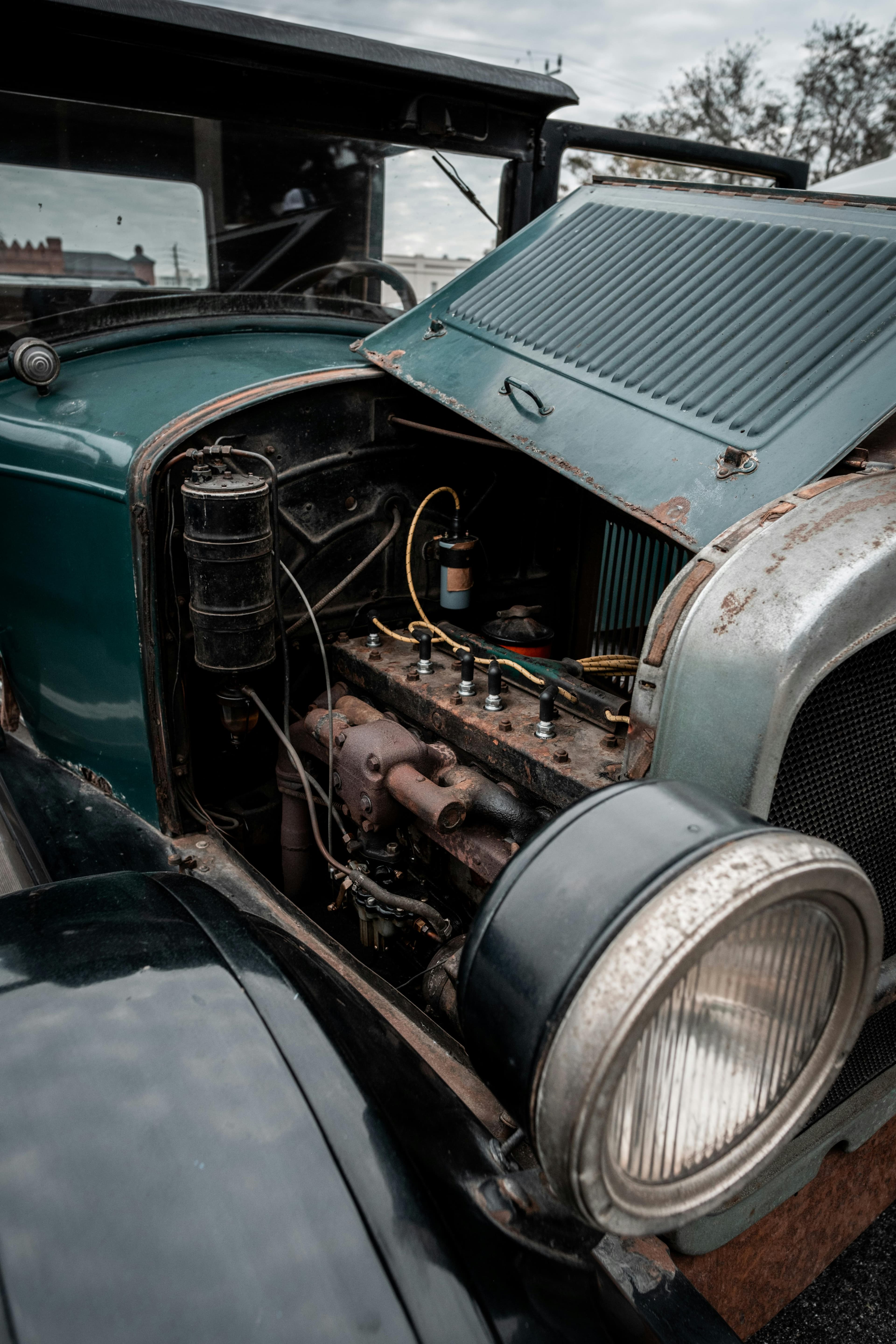
Every product whose original supplier has stopped servicing it, every vintage machine part you can't buy anymore, every piece of antique mechanics that has cracked over the decades — all of it can be brought back into production if a digital file of it exists.
3D scanning + CAD + 3D printing is the practical path. This article explains what reverse engineering means, when it works, and what the typical limits are.
What reverse engineering means
Conventional product design runs CAD → reality: someone draws, then a physical part is made. Reverse engineering goes the other direction: reality → CAD. We need a digital twin of something that already exists, so it can be reproduced, repaired, or improved.
The typical chain:
- Scanning — a physical part is captured as a 3D mesh (surface model) made of millions of points.
- Mesh cleanup — we remove scan noise, holes, and irrelevant surfaces.
- Building a parametric CAD model — when the part needs further editing (dimensional changes, fit corrections), we convert the mesh into a real production-grade model.
- Manufacturing — 3D printing, CNC machining, or traditional methods, depending on the part.
Total time: typically 3–10 working days, depending on complexity.
Where reverse engineering is actually useful
Some areas where we do this every week:
- Vintage car or motorcycle spare parts. When the model is discontinued and parts are no longer made, we scan the existing or broken piece, rebuild the missing geometry in CAD, and print a replacement.
- Industrial equipment. A 1980s machine whose manufacturer no longer exists — covers, guards, mechanical linkages reprinted from scratch.
- Restoration. Antique furniture details, old clock parts, reconstruction of historical objects.
- Design iteration on an existing product. A client has a working product but wants a small modification — we scan the existing one, edit in CAD, print the new version.
- Inspection and quality control. Manufactured part vs. CAD: does the as-built piece match the original specification?
- Anatomical replicas. Dental models, orthopedic aids, athlete-specific equipment fitting.
Scanning accuracy and limitations
3D scanning is not magic. Each technology has limits:
| Scanner type | Typical accuracy | Suits | Doesn't suit |
|---|---|---|---|
| Structured light | ±0.05–0.15 mm | Mid-size parts (brick to ~1 m) | Reflective surfaces without prior coating |
| Laser triangulation | ±0.02–0.05 mm | Small high-precision parts | Dark surfaces that absorb laser light |
| Photogrammetry | ±0.5–2 mm | Large objects, buildings, rooms | Smooth surfaces lacking visual texture |
Surface preparation is often the key: shiny, transparent, or very dark surfaces need a removable matte coating before scanning, washed off afterward.
Size range: our scanners cover from a few centimeters up to objects around 2 m. For larger objects (a car, a staircase, a room) we use photogrammetry or multi-region scanning.
Mesh-to-CAD: the slowest stage
Scanning itself is fast — a small part finishes in 5–30 minutes. The longest stage is converting the mesh into a parametric CAD model, because it requires engineering judgment:
- What's a design intent vs. a manufacturing artifact? A worn corner isn't always a 0.4 mm radius if the original was a sharp edge.
- Which surfaces are functional (have to match precise dimensions) vs. cosmetic (only the appearance matters)?
- Is the part symmetric? If yes, building the CAD from one half and mirroring is cleaner — scan noise on both halves doesn't accumulate.
A common mistake is printing a raw mesh directly without converting to CAD. The result looks bad: years of original wear and warping carry into the new part.
A typical project: a broken car grille
A concrete example of an everyday order:
Problem: The client's older BMW has a damaged center grille — half the part is intact, half is missing. Original spare parts are no longer manufactured.
Scanning (day 1): In our scanning bay. The intact half is matte-coated, scanned 360°. Result: an accurate mesh of the surviving half (±0.1 mm).
CAD modeling (days 2–4): An engineer opens the mesh in CAD software and builds a parametric model of the existing half. Then mirrors the other half, assuming the original was symmetric.
Client review (day 5): We send renders. The client compares photos of their old undamaged grille and confirms the mirrored half matches.
Printing (days 6–8): Printed in ABS (mechanically similar to the original injection-molded material). Two halves can be combined into one part where needed.
Finishing (days 9–10): Sanded, primed, painted in chrome auto paint. Shipped to the client.
Total cost: €350–600. Compared with sourcing OEM parts internationally — that's typically €800–2,000 plus months of waiting.
Material choice for replacement parts
A replacement part has to behave like the original. Material picks:
- PETG — fits most plastic injection-molded parts. Dimensionally stable, durable, chemical-resistant.
- PETG Carbon — when the original was glass-fiber reinforced or needs stiffness.
- ABS — closest to injection molding, typical for automotive interior parts.
- PA (nylon) — for load-bearing parts or hinges.
See 3D printing materials in Estonia for the full walk-through.
Pricing and lead time
A reverse-engineering project typically breaks down as:
- Scanning: €50–250 depending on part size. See 3D scanning price in Estonia.
- CAD modeling: €100–500 — depending on complexity and how much mirroring/repair is needed.
- Printing: Standard pricing — see the pricing guide.
Typical total for a simple spare part: €200–500. Complex projects (multiple parts at once, high complexity, NDA): €500–2,000.
Lead time: 5–10 working days from receiving the physical part.
Frequently asked questions
Can you scan a transparent or very reflective part?
Not directly. Such surfaces don't reflect light in a way the scanner can measure. We work around it: apply a removable matte spray, scan, then remove the coating. The whole process takes 30–60 extra minutes.
Can a 3D model be built from one of my old photos?
Not accurately. Recovering geometry from a single 2D photo is much weaker than 3D scanning. If the part exists physically, send it to us — that's always the better path.
Can you help if I only have half the part?
Often yes, especially when the part is symmetric. We scan the intact half, mirror the other half in CAD. If the part isn't symmetric, we need photos or drawings (even an old technical manual) to reconstruct the missing side.
Can you produce a part identical to the original?
Geometrically — yes, to ±0.1 mm. Material similarity depends on the original: if the original was injection-molded glass-fiber PA, 3D printing can get close but not identical. Functionally, the result fits in most cases.
Can you keep the CAD on file for future reprints?
Yes. After your order, the file lives in secure storage. Repeat orders only need a written request — no rescan needed.
Summary
Reverse engineering reopens the world of undigitized mechanics. It's the right choice when:
- Original spares aren't available and waiting isn't an option.
- The part exists physically, even broken.
- The replacement has to function, not be museum-grade.
- Quantities are low (1–50 units) — injection molding doesn't pencil out.
Start with a scanning inquiry or check initial pricing in the 3D scanning price article.