3D Printing Materials in Estonia
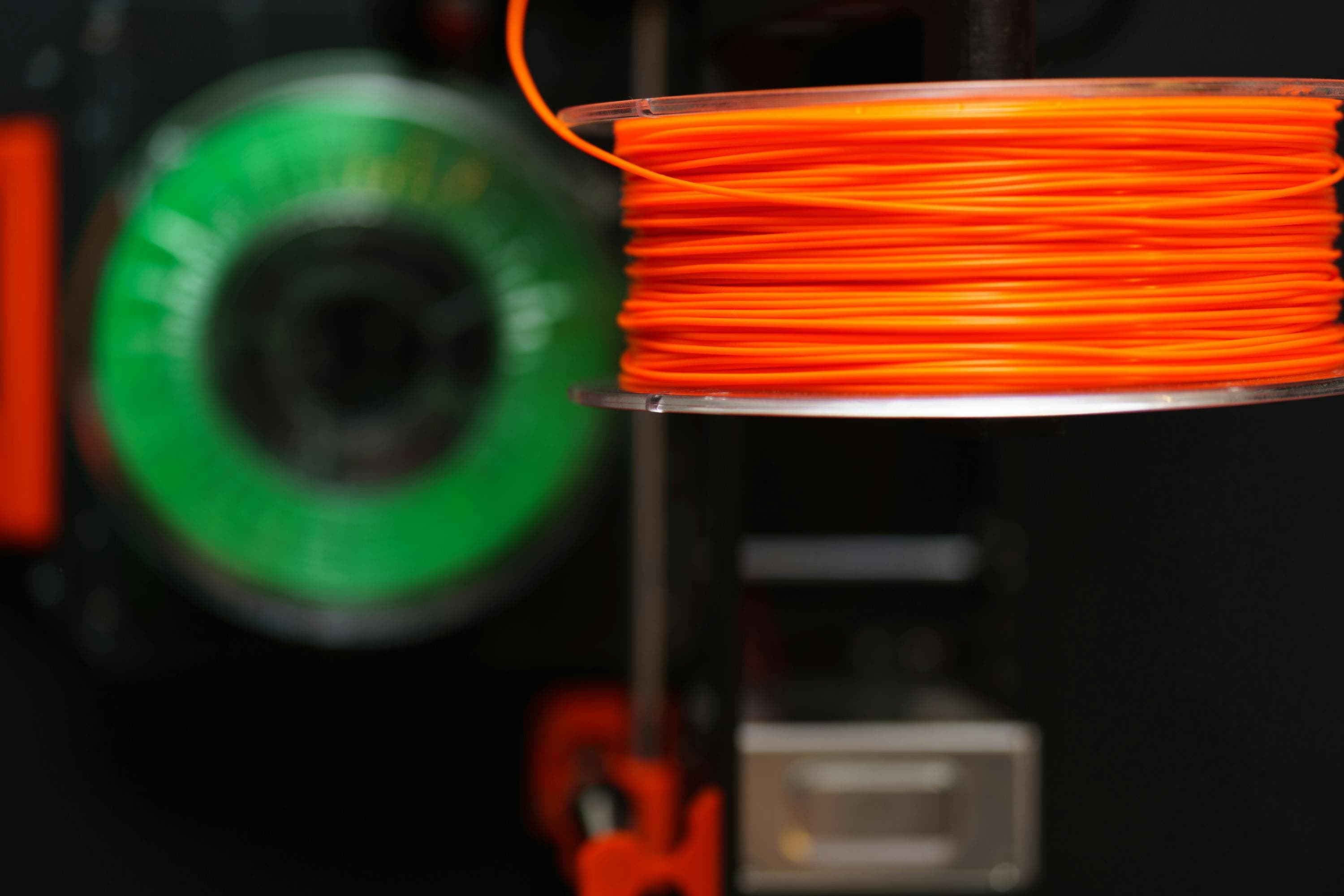
Material choice is one of the most important decisions in 3D printing. The right material makes a part strong, weather-resistant, and long-lasting. The wrong one means cracks, warping, or color fade within weeks.
This guide walks through the main 3D printing materials available in Estonia and helps you pick the right one for your project — whether it's a prototype, an outdoor enclosure, a spare part, or a decorative piece.
How to choose a material
Before getting into specific materials, ask yourself three questions:
- What environment will the part live in? Indoors, outdoors, under a car bonnet, in water?
- What mechanical load will it carry? Static decoration, a hand-held tool, an impact-absorbing frame?
- How important is appearance? Highly visible hero piece or hidden internal part?
Answers point you quickly to the right material.
PLA — standard and versatile
PLA (polylactic acid) is the most common 3D printing material. Easy to print, wide color range, affordable.
Strengths:
- Low printing temperature (190–220 °C), minimal warping
- Biodegradable (in industrial composting conditions)
- Wide color range — classics, silk finishes, marble and galaxy effects
- Good finish — matte or glossy
Limitations:
- Heat-sensitive — softens above 55–60 °C (not for under-dashboard use)
- UV-sensitive — degrades outdoors over time
- Lower impact resistance than PETG or ABS
Good for: prototypes, interior décor, figurines, low-load parts, architectural models, educational models.
3DCraft variants: PLA Standard (16+ colors), PLA Plus (reinforced), PLA Silk, PLA Galaxy (sparkle), PLA Marble.
PLA Carbon — carbon-fiber reinforced
PLA can be reinforced with carbon fiber for significantly higher stiffness and dimensional stability. The part doesn't warp with heat (within limits) or flex under load.
Strengths:
- Higher stiffness than standard PLA
- Better dimensional stability
- Matte-black finish looks professional
Limitations:
- Wears down nozzles faster (requires hardened nozzle)
- Higher cost than standard PLA
- Limited color range (mostly black)
Good for: engineering models, tool mounts, jigs, drone frames, enclosure frames.
PETG — strong and durable
PETG sits between PLA and ABS, combining the best of both. As easy to print as PLA, nearly as durable as ABS.
Strengths:
- Good chemical resistance
- Good impact resistance
- Higher heat tolerance than PLA (~70 °C)
- Better moisture resistance
- Easy to post-process
Limitations:
- Slightly trickier to print than PLA (stringing and bed adhesion)
- Narrower color range than PLA
Good for: outdoor enclosures, parts that contact water, mechanical frames, toys, bottles and containers.
Variants: PETG Standard, PETG Pro (improved printability), PETG Carbon.
ABS — the classic industrial material
ABS is the best-known thermoplastic — Lego bricks, automotive interiors, and tool casings use it.
Strengths:
- High heat tolerance (~100 °C)
- Impact and wear resistant
- Acetone-polishable and glueable
- UV resistant
Limitations:
- Warps during printing (requires heated bed and enclosed chamber)
- Emits fumes while printing — needs ventilation
- Narrower color range than PLA
Good for: automotive parts, tool housings, electronics casings, parts running in hot environments, vibration-resistant frames.
TPU — flexible and rubber-like
TPU (thermoplastic polyurethane) is a flexible material that behaves like rubber. Parts can stretch, bend, and return to shape.
Strengths:
- Excellent flexibility and resilience
- Good wear resistance
- Vibration damping
- Resistant to oils and fats
Limitations:
- Slow to print (low print speeds)
- Requires skill to tune (not ideal for fast consumer printers)
- Higher price than PLA or PETG
Good for: seals, phone cases, shoe soles, vibration isolators, toys, industrial gaskets.
Comparison table
| Material | Strength | Heat tolerance | UV resistance | Price | Good for |
|---|---|---|---|---|---|
| PLA | Medium | 55–60 °C | Low | Low | Prototypes, décor |
| PLA Plus | High | 65 °C | Low | Medium | Functional parts |
| PLA Carbon | Very high | 65 °C | Low | Higher | Engineering models |
| PETG | High | 70 °C | Medium | Medium | Outdoor, enclosures |
| PETG Carbon | Very high | 70 °C | Medium | High | Industrial parts |
| ABS | High | 100 °C | High | Medium | Hot environments |
| TPU | Flexible | 70 °C | Medium | High | Flexible parts |
How material affects price
Material cost comes from three factors:
- Filament price — PLA €16–22/kg, PETG €18–25/kg, ABS €20/kg, TPU €30/kg, carbon variants €35–40/kg.
- Print speed — TPU and some specialty variants print slower, increasing machine time.
- Nozzle wear — carbon variants require a hardened nozzle whose cost amortizes across prints.
For a precise estimate, use our price calculator where you pick the material and enter weight and print time.
Which material for my project
Prototype or mockup for design review → PLA (cheap, fast, sufficient).
Part contacting water → PETG (doesn't deform in moisture).
Part left outdoors → PETG or ABS (UV and weather resistance).
Tool holder or workshop jig → PLA Plus or PETG Carbon (stiffness + wear resistance).
Automotive, near the engine → ABS (heat tolerance).
Flexible part, seal, cover → TPU.
Sculpture, figurine, décor → PLA Silk, Galaxy, or Marble (aesthetics).
Frequently asked questions
What's the strongest 3D printing material?
At consumer grade — carbon-fiber-reinforced PETG or PLA Carbon. Industrial: PEEK and PC (polycarbonate), but those need specialist printers.
Is PLA OK for outdoor use?
Short term yes, but UV and temperature cycling degrade PLA in weeks to months. For outdoor, go with PETG or ABS.
What's the cheapest material?
Standard PLA. But "cheap" doesn't mean "inadequate" — PLA covers most prototyping and decorative needs.
Can I mix colors in one part?
Yes — we use dual-nozzle setups and mid-print color changes. The simplest route is single-color print then finishing. We'll discuss during quoting.
How long does printing take per material?
Material affects print speed. PLA and PETG print at ~50 g/h, ABS slightly slower, TPU clearly slower (~20–30 g/h). For a large part, TPU can take twice as long.
Summary
Material choice determines 70% of a part's performance. Quick rule:
- PLA — prototypes and décor
- PETG — outdoors and wet
- ABS — heat
- TPU — flexibility
- Carbon variants — when stiffness and dimensional stability are critical
If you're unsure, send us the file with a use-case description — we'll review and recommend the optimal material.
Start your project: contact form or quick estimate via price calculator.
Read more: