What is 3D-modeling?
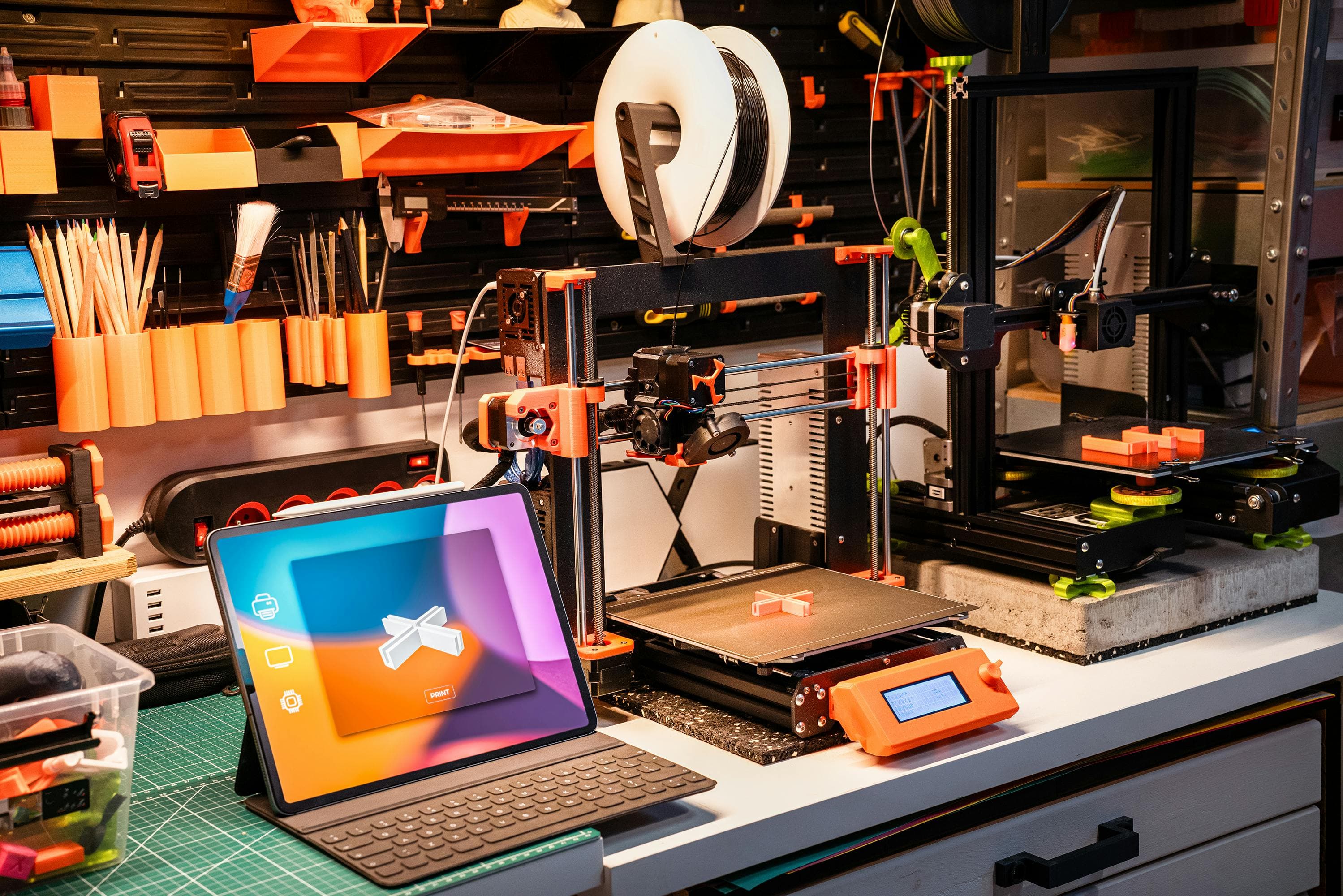
3D-modeling is the art and engineering discipline of creating digital representations of objects in three dimensions. Unlike 2D drawings, a 3D model contains depth, volume, and precise geometric data, making it suitable for manufacturing, rendering, simulation, animation, and real-world production.
In modern product development, architecture, engineering, and entertainment, 3D-modeling is as essential as photography or CAD design. It enables fast iteration, accurate visualization, and seamless transition from concept to production — including 3D-printing.
How 3D-Modeling Works
At its core, 3D-modeling transforms an idea into a structured digital object made of vertices, edges, and surfaces. This “mesh” can be precise and engineering-accurate or artistic and stylized depending on the use case.
Most workflows follow this structure:
- Concept creation — sketches, references, measurements.
- Base shape blocking — rough geometry to define proportions.
- Detailing — refining shapes, adding features, bevels, curves.
- Optimization — cleaning the mesh, reducing polygons, ensuring correctness.
- Exporting — preparing the model for rendering, animation, or manufacturing.
Depending on the goal, the model may be highly detailed (film quality) or mathematically exact (CAD engineering).
Main Types of 3D-Modeling
Polygonal Modeling
The most common technique in games, films, and concept design. Objects are built from polygons (usually quads and triangles).
Strengths: flexible, intuitive, ideal for creative modeling.
Examples: characters, props, architecture, environments.
CAD / Parametric Modeling
Uses mathematically precise curves (NURBS) and parameters instead of polygons.
Strengths: engineering accuracy, dimension-driven editing, tolerances.
Examples: mechanical parts, enclosures, prototypes, manufacturing files.
Sculpting
Digital sculpting mimics clay sculpting, allowing artists to shape highly complex organic forms.
Strengths: extreme detail, artistic freedom.
Examples: miniatures, figurines, creatures, statues.
Procedural Modeling
Models created using rules, algorithms, and nodes instead of manual editing.
Strengths: fast iteration, non-destructive workflow.
Examples: terrains, buildings, repeating patterns, generative design.
Photogrammetry & 3D-Scanning
Real-world objects are scanned or reconstructed from photos to create accurate 3D replicas.
Strengths: high realism, excellent for real-world products.
Examples: spare parts, human scans, cultural heritage, organic shapes.
Where 3D-Modeling Is Used
Product Design & Engineering
From prototypes to production parts, 3D models define geometry for manufacturing.
Companies rely on modeling to validate ergonomics, test ideas, and prepare objects for CNC machining or 3D-printing.
Architecture & Interior Design
Architects use 3D models to visualize buildings, interiors, lighting, and materials.
Clients understand projects better through realistic renders and walkthroughs.
Entertainment: Film, Games, VR/AR
Every 3D character, vehicle, creature, weapon, or environment begins as a 3D model.
Modelers collaborate with riggers, animators, and texture artists.
Marketing & Visualization
Brands create photorealistic renders for websites, packaging, ads, and catalogs — without needing physical prototypes.
Manufacturing & 3D-Printing
3D-modeling is the foundation of additive manufacturing.
A clean, watertight mesh ensures precise prints, optimal strength, and correct tolerances.
Art, Jewelry & Custom Projects
Jewelry designers sculpt detailed rings, pendants, and stones.
Artists create miniatures, statues, collectibles, and decorative pieces.
Common 3D-Modeling Tools
Different industries use different software depending on precision and workflow.
| Software | Strengths | Best For |
|---|---|---|
| Fusion 360 | CAD precision, parametric tools | Engineering, mechanical parts |
| Blender | Powerful, free, versatile | Art, animation, design, visualization |
| SolidWorks | Industry-grade CAD | Mechanical engineering |
| Rhino | NURBS accuracy | Jewelry, architecture |
| ZBrush | Best sculpting tool | Characters, miniatures |
| Cinema 4D | Fast rendering, motion design | Advertising, 3D visuals |
A typical studio or workshop uses multiple tools — CAD for mechanical accuracy and sculpting for organic shapes.
Why Businesses Use 3D-Modeling
Faster Development
3D models allow teams to test ideas early, avoiding expensive manufacturing mistakes.
Accurate Visualization
Clients can see exactly what they will get — in 3D, with real lighting, textures, and scale.
Customization
Products can be adjusted to fit unique requirements: medical devices, enclosures, ergonomic improvements, fits and tolerances.
Compatibility With 3D-Printing
A clean model directly translates into a successful print.
Manufacturing tolerances, thickness, and structural features can be tested virtually before production.
Lower Cost
Digital models reduce the need for physical prototypes and speed up approvals.
Key Takeaways
- 3D-modeling is the process of creating digital three-dimensional objects.
- Different modeling methods suit different industries (polygonal, CAD, sculpting).
- 3D models are essential in engineering, architecture, entertainment, product design and manufacturing.
- Clean, optimized models ensure successful 3D-printing and accurate production.
- 3D-modeling speeds up development, reduces cost and improves visual communication.
FAQ
What is 3D-modeling in simple terms?
It’s the process of creating a digital object that has width, height, and depth.
Do I need special software to create 3D models?
Yes. Tools like Blender, Fusion 360, SolidWorks or ZBrush allow you to design and export 3D objects.
How long does it take to create a 3D model?
Anywhere from 30 minutes to several days, depending on complexity and purpose.
Can I 3D-print any 3D model?
Almost — but the model must be watertight, manifold, and designed with proper wall thickness.
What’s the difference between CAD and polygonal modeling?
CAD is precise and mathematical; polygonal modeling is artistic and flexible.
Is 3D-modeling difficult to learn?
It has a learning curve, but modern tools and tutorials make it accessible for beginners.
Conclusion
3D-modeling is one of the most powerful tools in modern design and engineering. It transforms ideas into functional, testable, and manufacturable digital objects — ready for presentation or 3D-printing. Whether you're building a product, a prototype, a character, or an architectural space, a well-made 3D model is the foundation of high-quality results.
If you need a professional 3D model for printing or production, feel free to reach out — we’ll help bring your idea to life.